The Founder
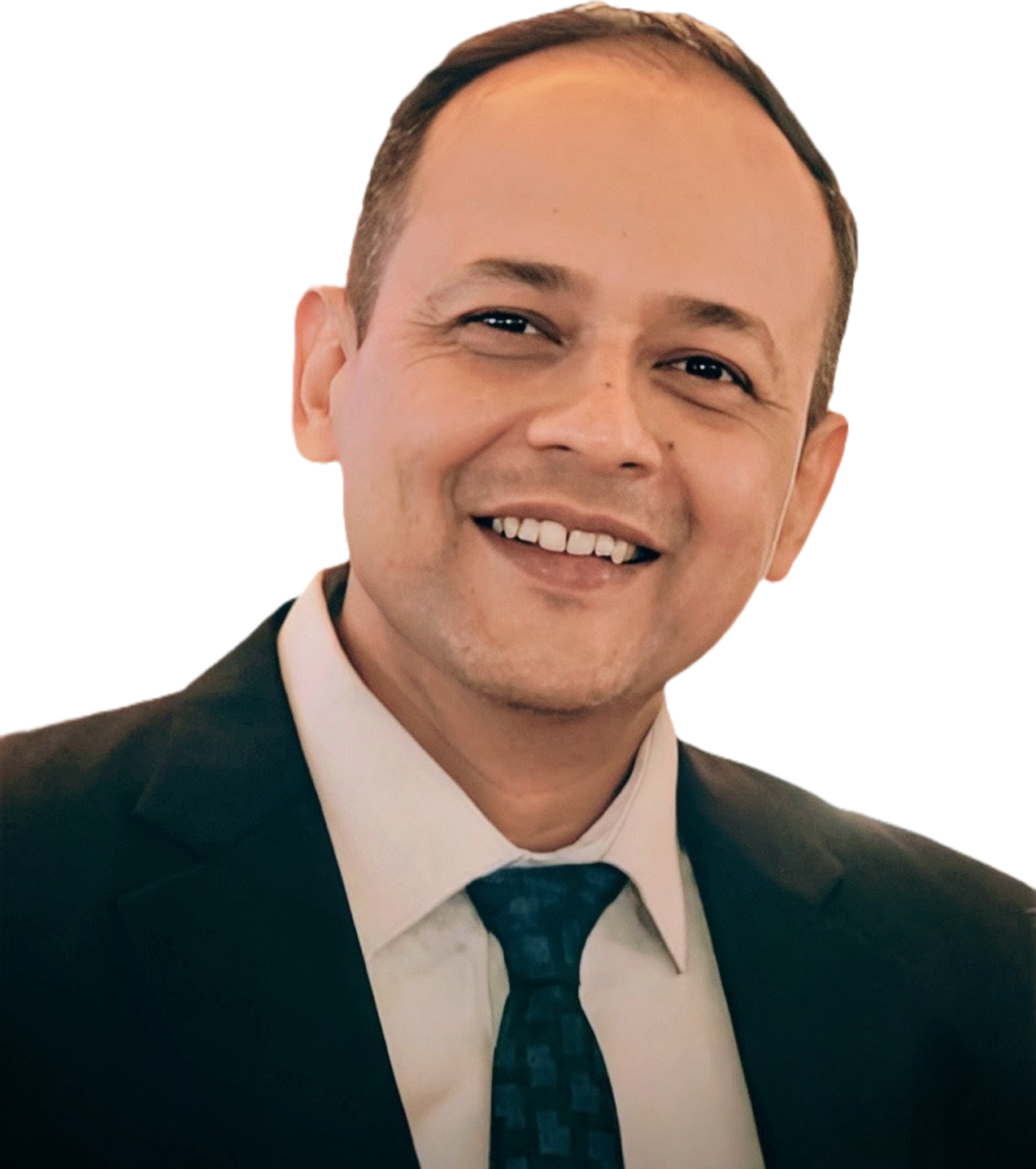
Founder, Noisience Institute · Strategist · Author · Noida, India
Twenty-five years at the intersection of strategy, technology, and consciousness. Six industries. Twenty-three books. One question that kept returning: why do intelligent people in intelligent organisations consistently make unintelligent decisions?
The Noisience Institute is the institutional answer to that question.
Industries spanned
The origin story
Tata Steel. SBI Capital Markets. Kotak Mahindra Bank. HCL Technologies. Birlasoft. Tech Mahindra. NTT DATA. Twenty-five years of moving between industries that had almost nothing in common except this: in each of them, the limiting factor was never information, never intelligence, and never resources.
It was always consciousness. The quality of awareness that leaders brought to the decisions that mattered. The capacity — or incapacity — to witness what was actually happening rather than what the organisation's narrative said was happening.
The question accumulated across boardrooms, crises, investment committees, and strategy reviews. Why does this keep failing at the same point? The answer was always somewhere in the space between what people knew and what they were able to perceive. That space has a name. It took two decades to find it.
The frameworks did not emerge from a research programme. They emerged from necessity — from the urgent requirement, in live situations with real stakes, for instruments that did not yet exist.
The Delta Mind was built because conventional decision frameworks assumed a kind of certainty that was never present in actual strategic decisions. The Four Layers of Reality was built because organisations kept exhausting themselves trying to control things that were genuinely uncontrollable. The Odyssey Equation was built because the leaders who navigated the hardest situations well were doing something that could not be explained by their analytical capability alone.
The Vedantic roots were not applied to the frameworks. They were discovered inside them — as the recognition that what was being observed in organisations mapped precisely onto what the Mandukya Upanishad described as the four states of consciousness. The philosophy was the explanation. The experience was the evidence.
Twenty-three books. Five frameworks. Two publications. And still no place on the open web where any of it could be found, indexed, or engaged with seriously. The work was being done in private while the problem it addressed was becoming more acute every quarter.
The Noisience Institute is the form that the body of work chose to take. Not a business — the conditions for that are not yet present. Not a personal brand — that would shrink what this is. A public contribution: freely available to the individual navigating ambiguity and the organisation that has exhausted conventional frameworks.
It is offered freely because the work demands it. That is not a positioning statement. It is a description of what happened when the question of what to do with twenty-five years of accumulated thought was taken seriously.
Career lineage
The founding statement
"The Noisience Institute exists as a contribution — not a business. This is what happens when a body of work insists on being useful."
— Amar B. Singh, Founder
The Institute is not a career pivot. It is not a personal brand exercise. It is not preparation for a keynote circuit, though that may follow. It is the institutional form of a body of work that accumulated over twenty-five years and refused to remain private.
It operates as a public contribution because that is the condition most consistent with the philosophy it embodies. An institution built on Noisience — on the cultivation of witness consciousness — cannot be built primarily from external motive without that motive distorting the work.
The sequence is deliberate: contribution first, credibility earned, the work finding its natural form in time. This is not naivety. It is the Odyssey Equation applied to institution-building.
The Institute is being built in public, at pace, without urgency. The work is the argument. The argument is sufficient.
The Institute is not seeking general correspondence. But it is open to conversations with people who have engaged seriously with the work — and have something worth saying.
Those who have engaged seriously with the work and wish to explore how it applies to their context — individual or organisational — are welcome to reach out. The conversation begins with the work, not with an agenda.